
Shopify vs WooCommerce vs Custom Builds: Which E-Commerce Platform Fits Your Business?
Choosing the right e-commerce platform is one of the most important decisions for any business planning to sell online. With so many options available, most business owners narrow their choices down to three main contenders — Shopify, WooCommerce, and Custom-built websites.
Each has its strengths, challenges, and ideal use cases.
In this post, we’ll break down everything you need to know about these platforms — from pricing and scalability to customization and SEO — so you can choose the best one for your business in 2026 and beyond.
1. Understanding the Three Platforms
Shopify: The All-in-One Hosted Solution
Shopify is a hosted e-commerce platform — meaning everything (hosting, security, updates, and backend management) is handled by Shopify itself. You simply sign up, choose a plan, and start building your store.
Ideal for: Small to medium businesses, dropshippers, and brands that want to launch fast without worrying about technical setups.
Key Features:
- Built-in hosting and SSL
- Drag-and-drop website builder
- Integrated payment gateways
- 24/7 support
- Large app marketplace
Pros:
Easy to use, even for beginners
Reliable uptime and fast performance
Scalable plans for business growth
Security handled automatically
Cons:
Monthly fees + transaction charges
Limited customization (beyond theme structure)
You don’t fully “own” your site’s codebase
WooCommerce: The Flexible WordPress Plugin
WooCommerce is an open-source e-commerce plugin that turns your WordPress website into a full online store. It’s self-hosted, meaning you’re responsible for hosting, updates, and security — but that also means full control.
Ideal for: Businesses that already use WordPress or want deep customization and ownership.
Key Features:
- Full control of design and functionality
- Large library of free and paid plugins
- SEO-friendly structure (especially with Yoast or Rank Math)
- One-time setup costs (no monthly platform fee)
Pros:
100% customizable
Great for SEO
Lower long-term costs
Huge community and resources
Cons:
Requires some technical knowledge
Hosting and maintenance are your responsibility
Performance depends on your server setup
Custom Build: The Tailor-Made E-Commerce Solution
A custom e-commerce website is built from scratch (using frameworks like Laravel, React, or Node.js), fully designed around your business’s unique needs.
Ideal for: Established brands, startups with specific workflows, or businesses that outgrow off-the-shelf platforms.
Key Features:
- Fully unique design and UX
- Custom backend features (inventory, CRM, logistics integration)
- High scalability and performance
- No platform restrictions
Pros:
Cons:
Higher upfront development cost
Requires a professional team for setup and maintenance
Longer build time
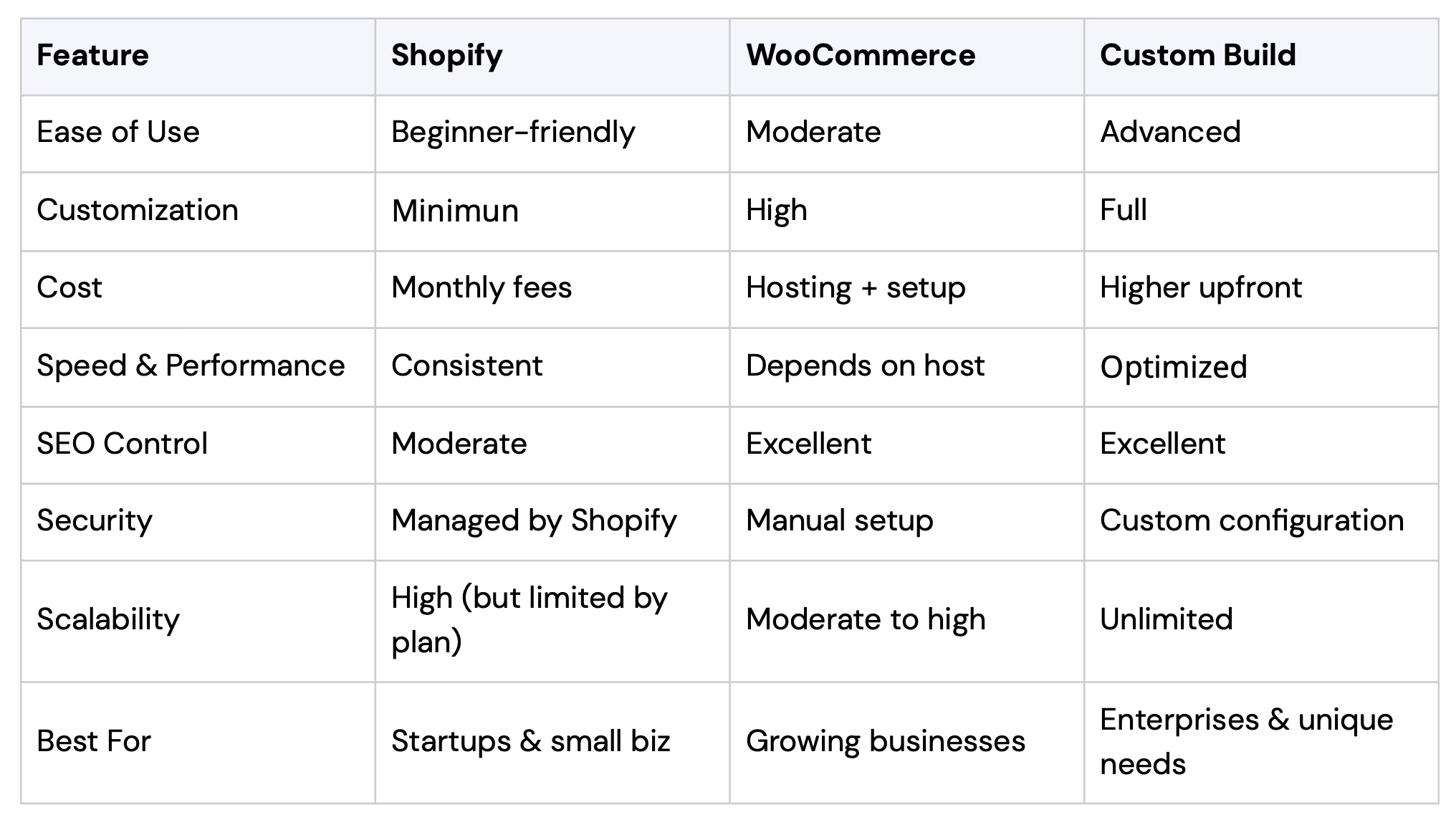
2. Feature Comparison Table
3. Cost Comparison
Shopify Pricing
Basic Plan: $39/month
Shopify Plan: $105/month
Advanced Plan: $399/month
Shopify Plus: $2,300 +/month
Plus Transaction Fees: 2.9% + 30¢ per transaction (unless using Shopify Payments)
Over time, subscription + app fees can add up, but Shopify offers a streamlined experience for that cost.
WooCommerce Pricing
WooCommerce itself is free, but you’ll need:
Hosting: $6–$70+/month
Domain: $10–$20/year
SSL Certificate: $0–50/year (often free)
Premium Plugins: $100–300 (optional)
Payment processing: 2.9% + $0.30 per transaction (via Stripe/PayPal, not platform fee)
The flexibility here is unmatched — you pay for what you actually need, not a flat monthly fee.
Custom Build Pricing
Custom development costs vary widely depending on complexity, but expect:
Small Store: $1,000–$3,000
Medium Store: $3,000–$8,000
Advanced or Enterprise: $10,000+
It’s a higher investment upfront, but long-term costs are predictable and you own everything.
4. SEO & Marketing Capabilities
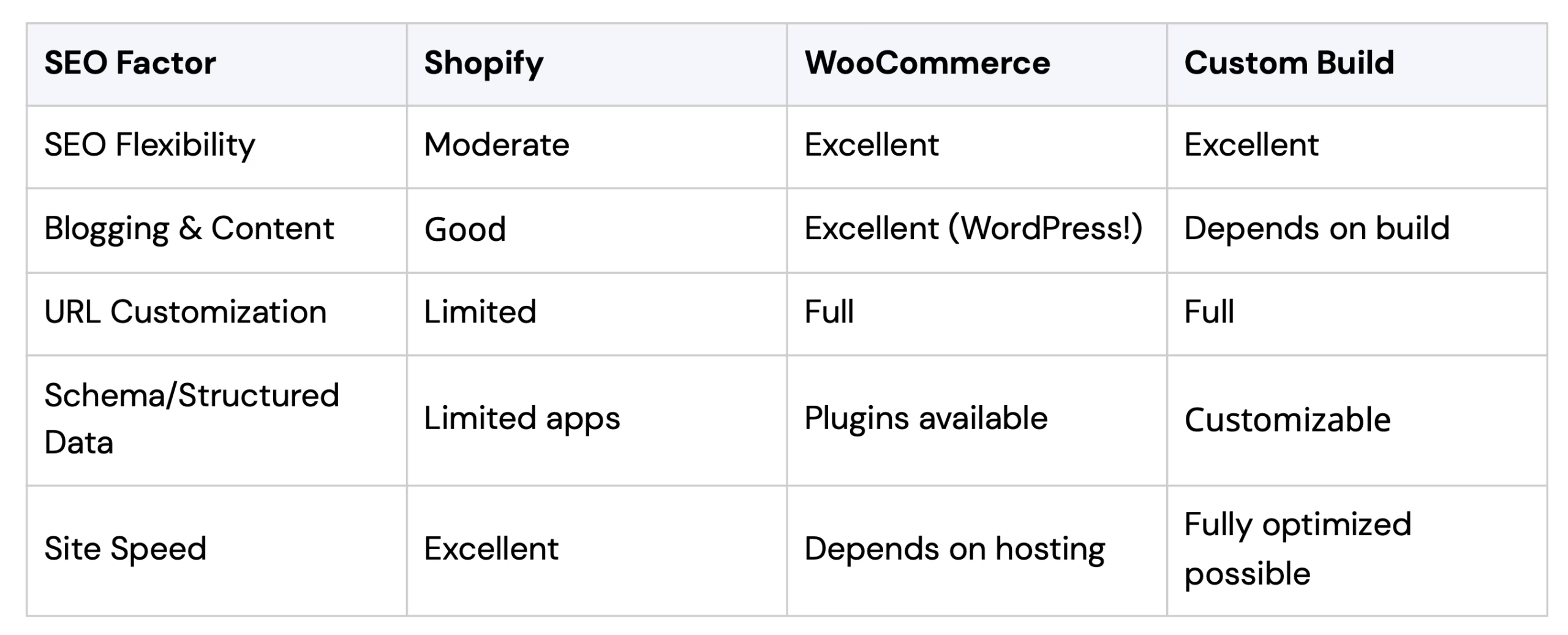
If SEO and content marketing are central to your growth, WooCommerce or Custom Build gives you the upper hand.
5. Scalability & Maintenance
Shopify
Scales easily through higher-tier plans, but you’re locked into their ecosystem. You can’t access the backend code deeply.
WooCommerce
Highly scalable with good hosting and caching setups. Maintenance can be automated via plugins or managed services.
Custom Build
Built for long-term scalability — perfect if you anticipate rapid growth or unique functionality (multi-vendor systems, ERP integrations, etc.).
6. Security & Support
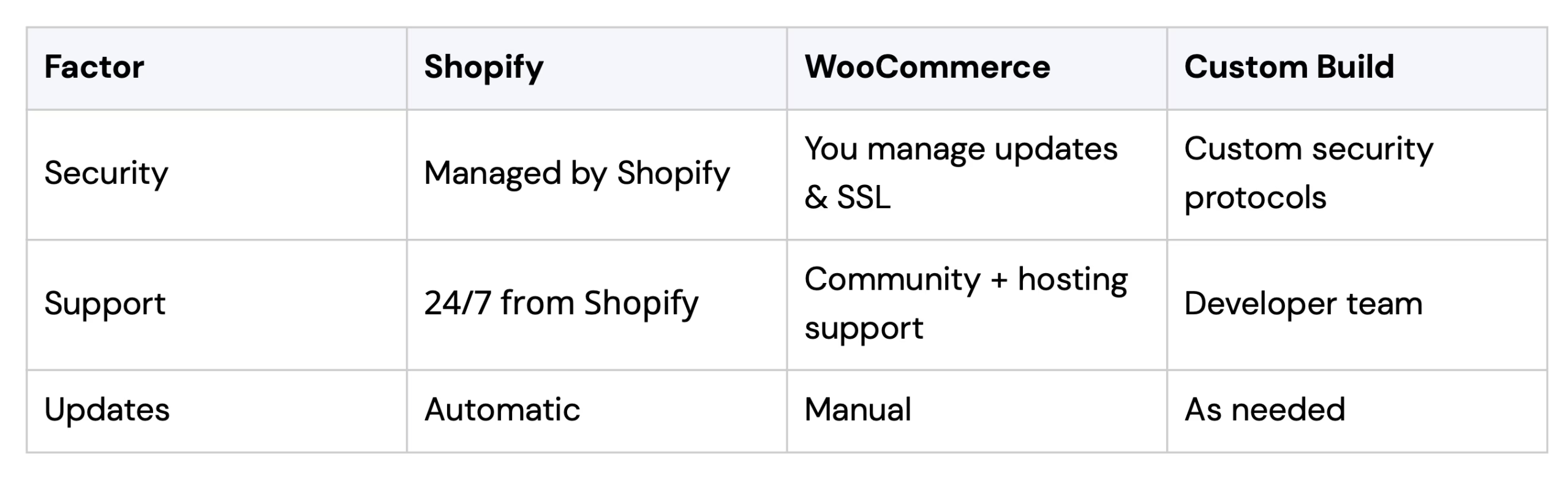
Shopify wins in ease and safety for beginners, but Custom and WooCommerce offer more control for serious businesses.
7. Which One Should You Choose?
Choose Shopify if:
- You want to launch quickly with minimal tech setup.
- You prefer convenience over customization.
- You’re a small to mid-size business or dropshipper.
Choose WooCommerce if:
- You want full control and ownership.
- SEO and content marketing are priorities.
- You’re comfortable managing hosting or have a web partner.
Choose Custom Build if:
- You have a unique business model or complex requirements.
- You want full flexibility, speed, and scalability.
- You see your e-commerce store as a long-term investment.
8. Our Expert Recommendation
At Website Forces, we’ve helped clients across all three platforms — and our verdict is simple:
- Shopify is great for quick launches and non-technical entrepreneurs.
- WooCommerce is perfect for growth-focused, SEO-savvy businesses.
- Custom Builds are best for brands that demand total control, integration, and scalability.
We often start clients on WooCommerce or Shopify and later help them migrate to custom systems as their business grows.
Conclusion
Choosing between Shopify, WooCommerce, and a Custom Build depends on your goals, budget, and vision.
Shopify: Simple, fast, beginner-friendly.
WooCommerce: Flexible, SEO-rich, cost-effective.
Custom Build: Scalable, powerful, future-ready.
At the end of the day, the right platform isn’t just about features — it’s about what fits your business needs.
Ready to build or upgrade your online store?
Explore our E-Commerce Development Services to discover how we can help you choose, build, or migrate to the perfect platform for your business growth.